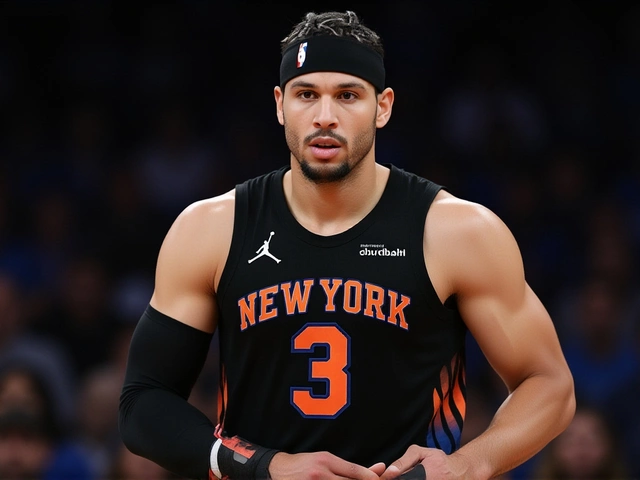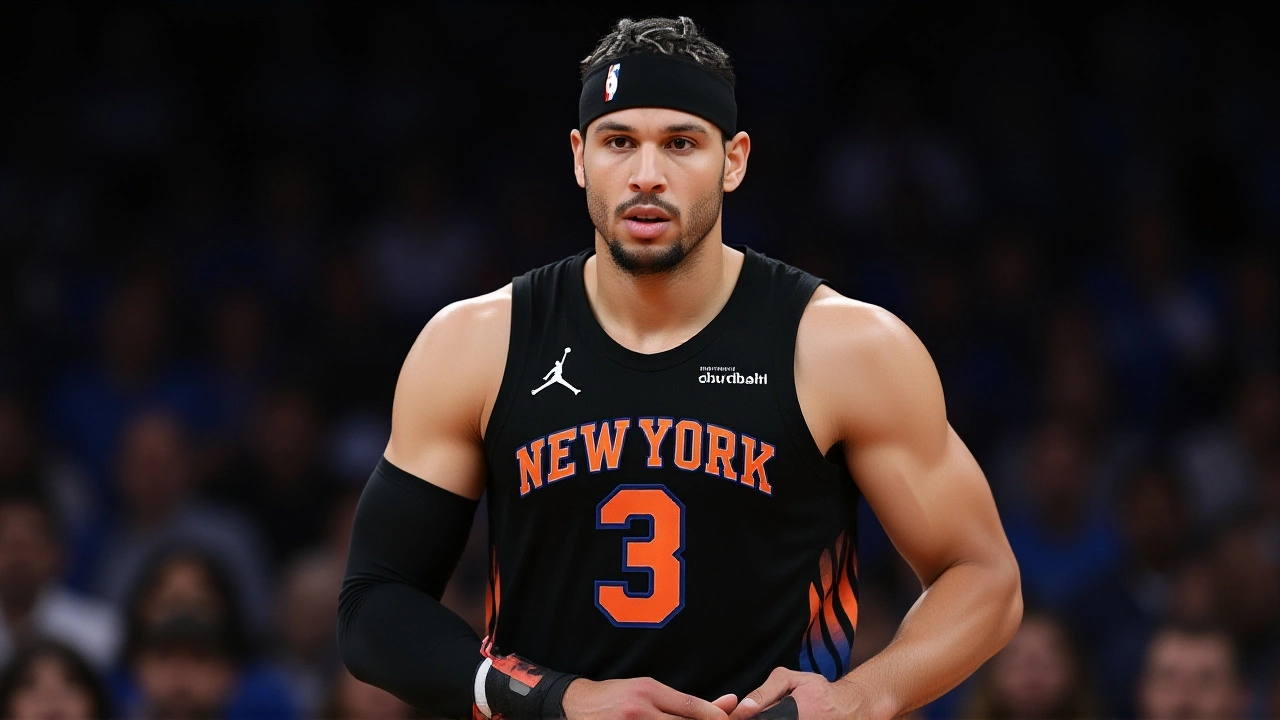
When Josh Hart, guard for the New York Knicks, decided to answer a defensive dare on Thursday night, he didn’t just raise his hand—he buried five three-pointers and dropped a playoffs career-high 26 points. The result? A commanding 109–93 victory over the Cleveland Cavaliers at Madison Square Garden that shifted the momentum of the entire series.
The win gave the Knicks a 2–0 lead in the best-of-seven Eastern Conference Finals, putting them within two wins of the 2026 NBA Finals. But more than the scoreline, it was the narrative that stunned observers: Cleveland’s coaching staff effectively told Hart to beat them, and he obliged with surgical precision.
The Strategy That Backfired
Here’s the thing about playoff basketball—sometimes you have to make a gamble. The Cavaliers’ defensive scheme in Game 2 was built on a simple premise: lock down everyone else and let Josh Hart shoot. It’s a risky play, especially against a player known for his hustle and versatility rather than pure scoring volume. But the Cavs felt they had no choice, likely overwhelmed by other offensive threats on the Knicks’ roster.
Turns out, that was a miscalculation of epic proportions. By loading up on other players, Cleveland left Hart with open looks from beyond the arc. And instead of shying away from the pressure, Hart leaned into it. He shot 47.6% from the field (10-for-21) and an even more impressive 45.5% from three-point range (5-for-11). Those aren’t just good numbers; they’re game-breaking numbers.
Sports Illustrated captured the essence of the night perfectly in their headline: "The Cavaliers Challenged Josh Hart. He Answered, and Now the Knicks Look Unstoppable." It wasn’t just about the points—it was about the psychological blow. When your primary defensive strategy collapses because one player refuses to miss, panic sets in fast.
Hart’s All-Around Dominance
Let’s look closer at the stats, because the box score tells only part of the story. Hart didn’t just score; he orchestrated. In 33 minutes and 20 seconds of action, he recorded:
- 26 Points: A new personal best in the playoffs.
- 7 Assists: Showing he can create for others when needed.
- 4 Rebounds: Including 1 offensive board, keeping possessions alive.
- 2 Steals: Generating transition opportunities.
- +18 Plus/Minus: The Knicks outscored Cleveland by 18 points while he was on the floor.
That plus/minus rating is particularly telling. It means that whenever Hart was on the court, the Knicks were dominating. When he sat, the margin tightened or flipped. This isn’t just a scoring night; it’s a statement of value. Hart tied his career-high for made threes in a playoff game (five), proving he has expanded his arsenal significantly since his early years in the league.
Oddly enough, he also committed five personal fouls—a reminder that playing aggressive defense and diving for loose balls comes with risks. But with only one turnover, his efficiency was remarkable. He didn’t force shots; he took what the defense gave him and punished them for it.

Why This Matters for the Series
Going up 2–0 in a conference finals is huge. Historically, teams that take a two-game lead at home rarely lose the series. But this win feels different because of *how* it happened. The Knicks showed they can win without relying solely on their star power if role players step up. Hart’s emergence as a primary offensive threat changes the calculus for Cleveland entirely.
Imagine being a defender tasked with guarding someone who suddenly becomes unstoppable. Do you double-team him? Then who gets open? Do you switch onto him? Then you might be mismatched physically. The Cavs are now facing a dilemma with no easy answer. As one analyst put it, "You can’t just ignore Josh Hart anymore. He’s shown he can carry an offense when called upon."
This performance also silences any lingering doubts about the Knicks’ depth. While bigger names often grab headlines, it’s players like Hart—who do the dirty work and then drop buckets when needed—that build championship pedigrees. His +18 rating suggests he was the engine of the win, driving both offense and transition defense.

What’s Next for Cleveland?
The Cavaliers face a stark reality: they must adjust quickly or risk elimination. Game 3 will likely see them abandon the "let Hart shoot" strategy entirely. Expect tighter coverage, possibly trapping him on pick-and-rolls, or forcing him into difficult mid-range jumpers where he’s less efficient.
But here’s the twist: if Cleveland starts focusing all their energy on Hart, other Knicks players will get open. That’s the beauty of modern NBA offenses—they’re designed to exploit defensive rotations. If Hart draws double teams, look for secondary scorers to capitalize. The Knicks have proven they can hit threes in bunches, and Cleveland’s perimeter defense hasn’t been bulletproof.
For now, the narrative belongs to New York. The energy at Madison Square Garden was electric, fueled by Hart’s heroics and the sense that something special is brewing. Whether this leads to a sweep or a hard-fought seven-game battle remains to be seen, but one thing is clear: the Knicks are no longer underdogs. They’re contenders.
Frequently Asked Questions
How did Josh Hart perform statistically in Game 2?
Hart scored a playoffs career-high 26 points on 10-of-21 shooting from the field and 5-of-11 from three-point range. He also added 7 assists, 4 rebounds, 2 steals, and finished with a +18 plus/minus rating in 33:20 minutes played.
What was the final score of Game 2 between the Knicks and Cavaliers?
The New York Knicks defeated the Cleveland Cavaliers 109–93 in Game 2 of the Eastern Conference Finals, taking a 2–0 series lead.
Why did the Cavaliers' defensive strategy fail?
Cleveland attempted to limit other Knicks scorers by giving Josh Hart space to shoot. However, Hart capitalized on these open looks, hitting five three-pointers and leading the team offensively, which backfired strategically for Cleveland.
Is 26 points a career high for Josh Hart in the playoffs?
Yes, 26 points is a new personal best for Hart in NBA playoff competition. Additionally, his five made three-pointers tied his previous career-high for threes in a single playoff game.
Where does the series stand after Game 2?
The New York Knicks lead the best-of-seven Eastern Conference Finals series 2–0 against the Cleveland Cavaliers, meaning they need one more win to advance to the NBA Finals.